
Many websites look good at first glance. The design is modern, the messaging sounds confident, and the pages are filled with features and promises. Yet visitors arrive, skim briefly, and leave without taking action.
This is not usually a traffic problem or even a design issue. In most cases, the gap is content. More specifically, content that is written from the company’s point of view instead of the user’s.
User-first content has become one of the clearest differentiators between websites that perform and those that simply exist. It is not about trends or clever copy. It is about clarity, usefulness, and respect for how people actually read online.
What User-First Content Really Is
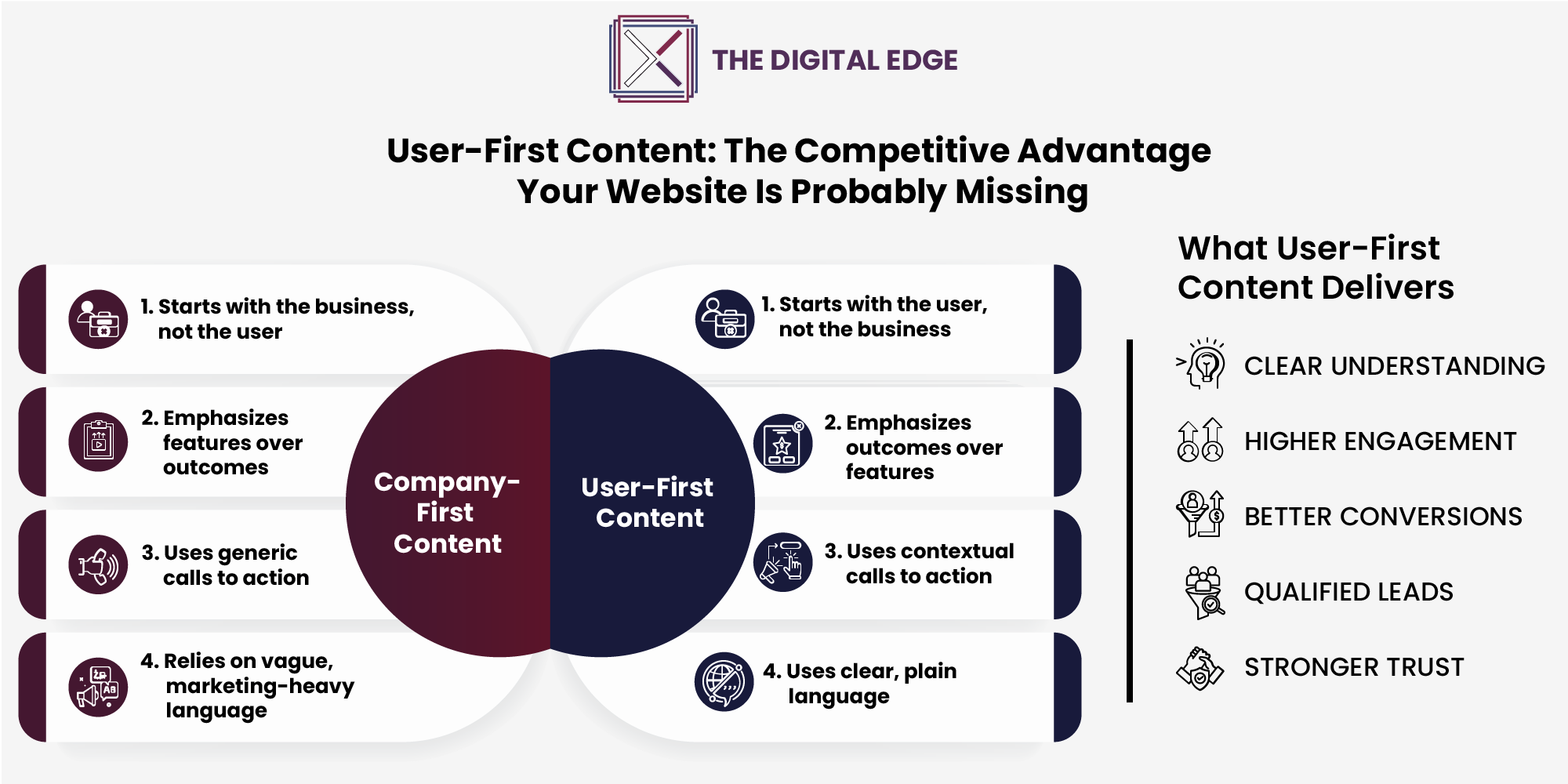
User-first content starts with intent. It asks what the visitor is trying to understand, solve, or decide when they land on a page. The content is shaped around that need, not around internal messaging or marketing priorities.
This approach does not remove personality or brand voice. It sharpens it. When content is focused on helping the reader, the message becomes clearer and more credible.
User-first content explains things in plain language. It avoids unnecessary buildup. It gets to the point and stays there. Most importantly, it anticipates questions before the reader has to ask them.
Why Many Websites Miss the Mark
A common mistake is writing content from the inside out. Businesses lead with who they are, what they do, and why they think they are different. While that information matters, it rarely matters first.
Visitors arrive with limited attention. They want to know if the page is relevant to them. If that answer is not obvious quickly, they move on.
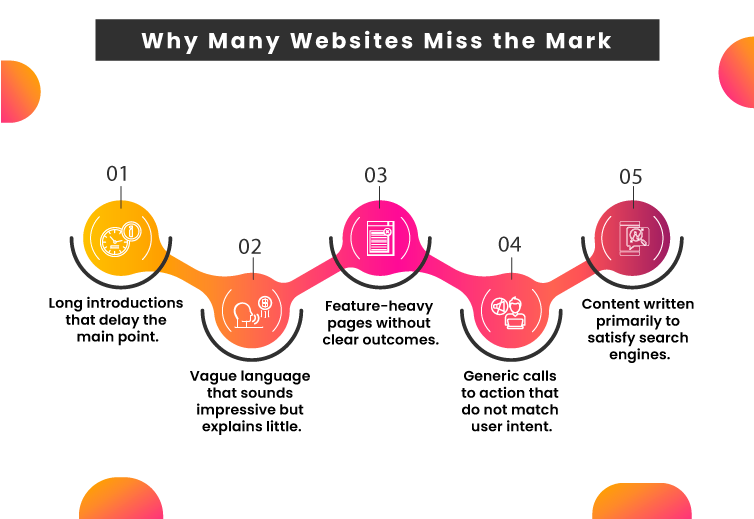
Some patterns that work against user-first content include:
- Long introductions that delay the main point.
- Vague language that sounds impressive but explains little.
- Feature-heavy pages without clear outcomes.
- Generic calls to action that do not match user intent.
- Content written primarily to satisfy search engines.
None of these issues mean the business lacks value. They mean the value is not being communicated in a way users can process easily.
How User Behavior Has Changed
User expectations are shaped by constant exposure to good digital experiences. People are used to platforms that guide them clearly and efficiently. When a website feels confusing or self-focused, it stands out for the wrong reasons. Also, most users scan before they read. They look for signals that confirm relevance. Therefore, headings, structure, and clarity matter as much as the words themselves.
Search engines now reflect this behavior. Pages that keep users engaged and answer their questions thoroughly tend to perform better over time. This is not because they follow a formula, but because they align with how people consume information.
What User-First Content Looks Like on a Website
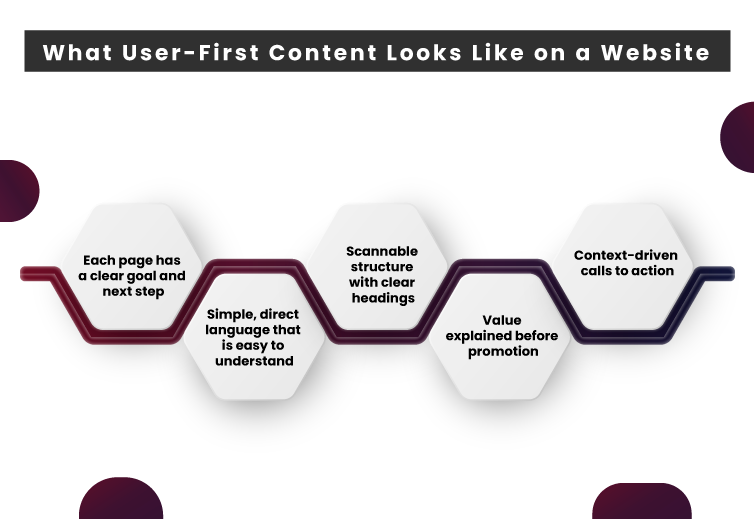
User-first content is visible in the way a website is structured and written. It guides visitors without overwhelming them and makes each interaction feel intentional. Here’s how;
- Every page has a clear purpose. Visitors can quickly understand what the page is about and what step to take next without having to search for direction.
- The language stays simple and direct. Sentences are easy to follow, and the message is clear without relying on clever phrasing or vague statements.
- The structure supports how people actually read online. Headings provide guidance, and lists are used only when they make information easier to absorb.
- Information comes before persuasion. The content explains the value first, then encourages action in a way that feels natural and relevant.
- Calls to action match the context of the page. They feel like a logical next step rather than a sales push.
When these elements work together, the website becomes easier to navigate and easier to trust.
Why This Matters for Business Results
User-first content is not just a writing preference. It has a measurable impact. When users understand your offering faster, they stay longer. When they find answers easily, they are more likely to take the next step. When expectations are clear, sales conversations start at a higher level.
Over time, this leads to:
- Higher-quality leads
- Better conversion rates
- Fewer misunderstandings during onboarding
- Stronger brand credibility
These improvements do not require more traffic or louder messaging. They come from making existing content work harder for the user.
User-First Does Not Mean Playing It Safe
Focusing on user-first content does not mean playing it safe or losing your brand’s voice. In fact, the opposite happens. When content is clear and stripped of unnecessary filler, the brand voice becomes more confident and intentional. The business communicates what it offers and who it serves without confusion, making differentiation easier to understand.
The real challenge lies in restraint. It requires deciding what not to include, removing sections that may feel important internally but add little value to the user. It also requires ongoing attention, because users need change and content must evolve with them. Websites that perform well treat content as a living asset, continuously refined rather than a one-time task.
Final Thought
Your website already represents your business. The question is whether it represents it from the user’s perspective. User-first content aligns your message with how people actually read, decide, and take action. It removes friction and builds trust quietly but consistently.
In a crowded digital space, that clarity is a competitive advantage many websites still miss
Build a Website That Works for Your Users
User-first content only delivers results when it’s supported by the right structure, design, and strategy. A website should guide users naturally, answer their questions clearly, and move them toward action without friction.
That’s exactly how we approach website development at The Digital Edge. We design and build websites with real users in mind, combining clear content, intuitive structure, and performance-focused development. The result is a site that doesn’t just look good, but works hard for your business.
If your current website isn’t converting visitors into leads or customers, it may be time for a rethink. Check out our website development and SEO services or contact our team to discuss a solution built around your users and your goals